
Planning a PVC Gate: What to Work Out Before You Request a Quote
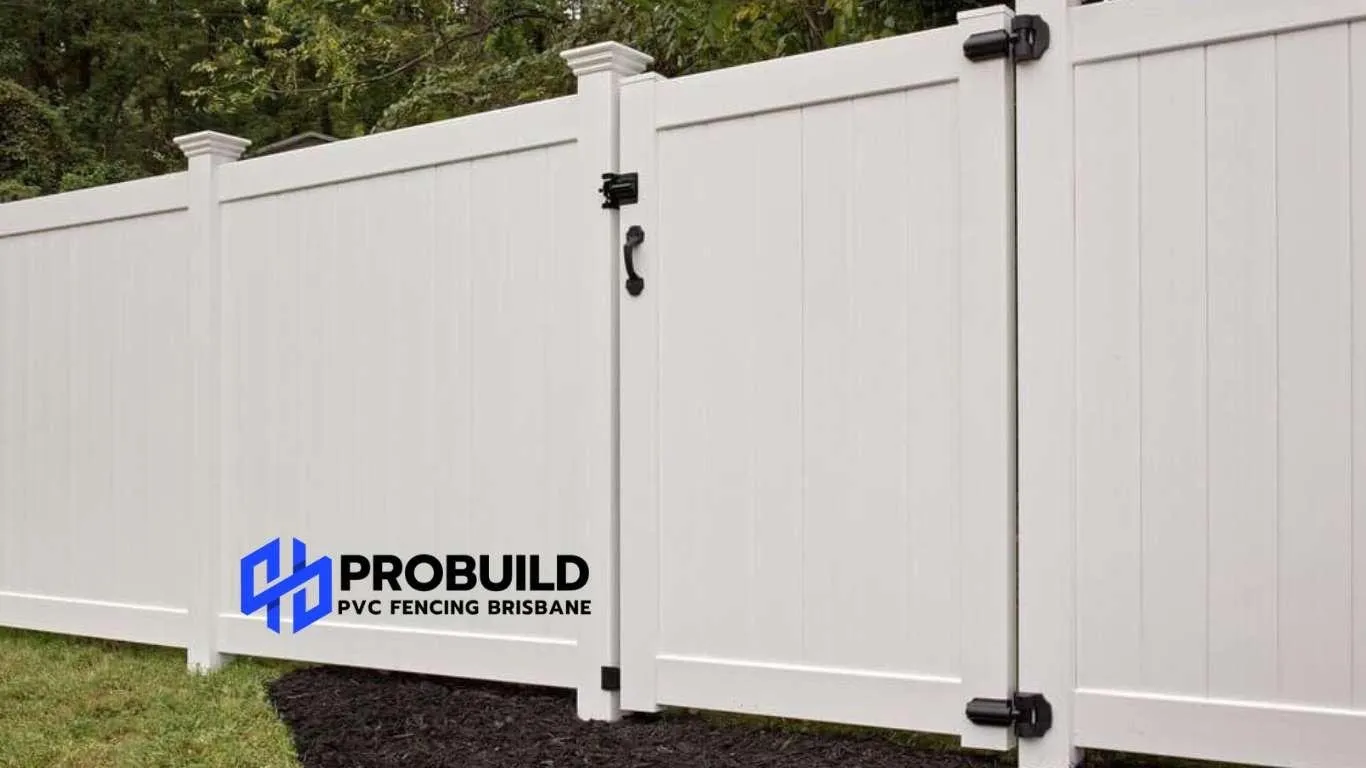
A pedestrian gate is the narrower gate on a front path or down the side of the house, used by people and for wheeling bins, a mower or a barrow through. A driveway gate closes off a wider opening so a car, trailer or boat can come in. Some properties need both. Once you know which one you're after, it's easier to get a useful quote if you can send rough measurements of the opening, notes on the ground it sits on, a few clear photos and an existing site plan if you have one.
This guide covers each of those steps and finishes with a list of questions to ask your supplier. To see the gate styles currently offered, visit our PVC gates page.
Pedestrian gate or driveway gate
Choose a pedestrian gate when the opening is mainly for people and household items. Choose a driveway gate when a vehicle has to get through. A few details about each make the quote conversation much quicker.
- Pedestrian gate: note the width of the path or side passage the gate opens onto, and whether you regularly wheel anything bulky through it, such as a ride-on mower or a wide barrow. If someone using a pram, walker or wheelchair needs access, say so.
- Driveway gate: note the width of the driveway where the gate would go, how far that line sits back from the street, and whether the driveway rises or falls behind it. A slope affects any gate that swings over it.
- Both: if you want a driveway gate at the front and a smaller gate down the side, include both in one enquiry so they can be planned together.
If children or pets need to stay in, mention it. That affects how you'll want the gate to close and latch.
Describe the access, not just the gate
If you're not sure which gate you need, describe how the opening will be used. "We need to get a trailer into the backyard twice a year, and bins out every week" tells a supplier more than "a double gate". They can then explain the options that suit that use.
Look at where the gate would swing, too. Note whether there's room for it to open inward or outward without hitting a step, wall, tap or parked car, and ask what opening styles are available for the gate you're considering.
Measure the opening
Rough measurements help with an early discussion. They don't replace a proper measure before anything is ordered or built.
When you measure:
- Measure the width of the opening between whatever sits on each side, such as an existing post, a brick pier, a wall or the end of a fence run.
- Measure at more than one height. If the width at the top differs from the width at the bottom, note both. Older posts and walls aren't always straight.
- Note what's on each side. Write down whether each side is an existing fence post, a masonry wall, the house or open ground. Photos help here too.
- Note the height of the fence it joins, if there is one, so the gate can be discussed in relation to the fence around it.
- If there's no opening yet, mark where you'd like the gate and measure from fixed points such as the corner of the house or a boundary peg.
A tape measure is fine for this. Record each measurement with a note of where it was taken, and keep the list with your photos. If you have an existing site plan for the property, include that as well.
Look at the ground and the swing area
The ground under and around a gate matters as much as the opening itself, and it's easy to overlook in photos.
Check for:
- Slope: does the ground rise or fall across the opening, or in the direction the gate would open?
- Surfaces: concrete, pavers, turf, gravel or garden bed, and whether the surface changes across the opening
- Steps or edges: kerbs, retaining walls, garden edging or a lip between paths
- Obstacles: downpipes, taps, meter boxes, tree roots, plants or anything else near where the gate would sit or swing
- Water: areas that stay wet or carry run-off after rain
Don't try to solve these yourself. Note them and photograph them, then ask how they would affect the gate options for that spot.
Think about the existing fence
The fence your gate joins affects how the job is planned.
- New fence and gate together: if you're putting in new PVC fencing, list the gate as part of the same enquiry so the whole run is planned together. Our guide to full privacy vs semi-privacy PVC fencing can help you choose panels for the fence on either side.
- Adding a gate to an existing fence: say what the current fence is made of, roughly how old it is, and what condition the posts are in. Photos of the posts beside the opening are especially useful.
- Matching the look: if you want the gate to match a particular panel style, such as a privacy or semi-privacy fence, say so and ask what matching options are available.
- Shared boundaries: if the gate is in a fence you share with a neighbour, talk to them before you go ahead.
Photos to take before you request a quote
Clear photos save a lot of back and forth. Our quote request form lets you attach photos along with your job details.
- The full opening, taken straight on from a few steps back
- The same opening from the other side, if you can safely get there
- Each side of the opening up close, showing the post, wall or pier
- The ground across the opening and through the area where the gate would swing
- Any slope, step, downpipe, tree or garden bed nearby
- The fence on either side of the gate
- A wider shot showing where the gate sits in relation to the house, driveway or path
Daylight photos with the whole area in frame are more useful than close-ups taken at night.
Questions to ask your supplier
Once you've done the groundwork, these questions will help you compare options and understand what's included.
- Which gate styles suit the access I've described?
- What opening options are available for this gate, and what does each involve?
- Can the gate match the fence panels I have or am planning?
- How do the slope, surface and obstacles at my opening affect the options?
- Will the existing posts or walls be used, or does that need checking first?
- Is an automatic option available for this gate, and what would that involve?
- What's included in the quote, and what isn't?
- Is the gate I'm interested in currently available?
- If a site measure is needed, how is that arranged?
If budget is part of the decision, our guide to the cost of PVC fencing covers that separately.
Common questions
Do I need exact measurements before I ask for a quote?
No. Rough measurements, photos and notes on how you'll use the gate are enough to start a conversation. Measurements should be confirmed before anything is ordered or built.
Can I add a PVC gate to a fence that isn't PVC?
Ask about this with photos of your existing fence and the posts beside the opening. Whether it suits your property depends on what's there now and its condition.
Should I plan the gate and fence together?
If you're putting in new fencing as well, include the gate in the same enquiry. That way the gate's position, the panels either side and the access you need can all be planned together.
Get a quote for your PVC gate
Once you know what needs to get through, have your measurements written down and some photos of the opening, the next step is a quote. Send your photos, recorded measurements and an existing site plan if you have one through our quote request form, or call (07) 3186 9711 to talk through your gate. You can also see the current styles on the PVC gates page.