
Planning
PVC vs Timber Fence on a Shared Boundary: The Upkeep Both Sides Forget
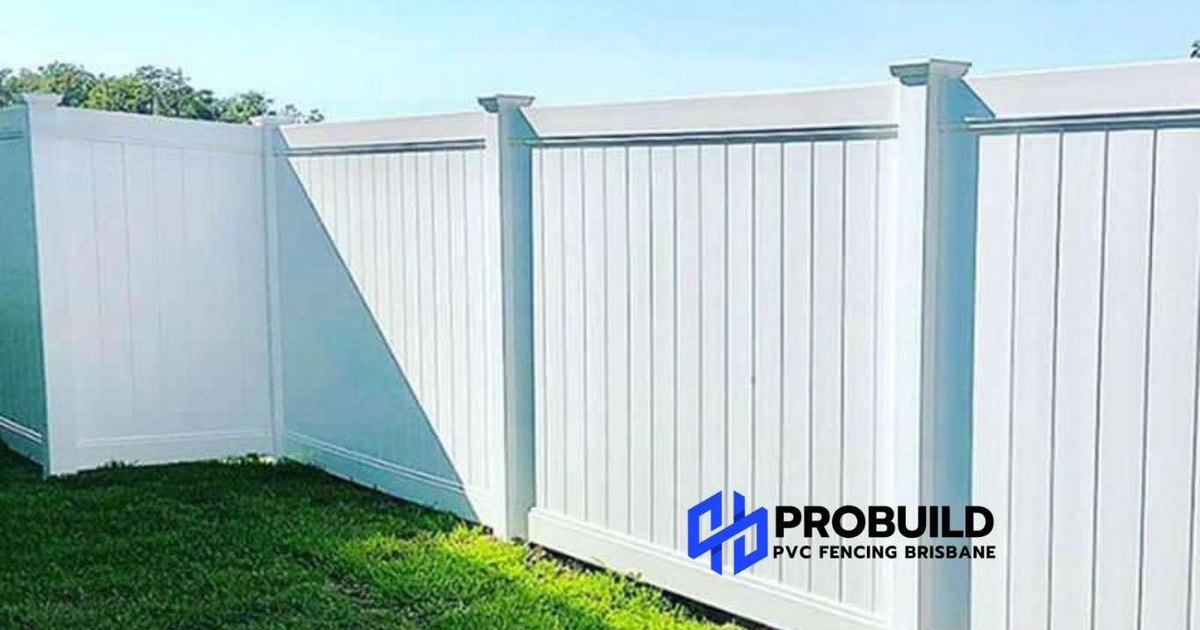
When you choose between a PVC vs timber fence on a boundary you share with a neighbour, the difference that matters most is the upkeep after the fence goes in. A timber fence asks both households to keep coating their own face, replace palings and watch the posts at ground level. A white PVC fence is the same white on both faces and needs a wash now and then. If neither of you wants to keep recoating a fence, PVC is the better choice for a shared boundary, so settle the upkeep question with your neighbour before anyone asks for a quote.
PVC vs timber fence at a glance
| Timber | White PVC | |
|---|---|---|
| Upkeep | A protective finish once it is up, then recoats on both faces | No sanding or painting; a wash when it needs one |
| How long it lasts | WoodSolutions: at least 15 years in the ground for durability class 1 or 2 timber, many years beyond that above ground when properly maintained | Every Probuild kit carries a 30-year limited manufacturer's warranty (a warranty term, not a lifespan) |
| Upfront price | Comes down to the quote for your run | Supply prices for most of our panel kits are listed in the shop (posts sold separately); installed price is quoted for your run |
| Looks | A natural timber look | The same white on both faces |
Verdict: if you want a natural look and both households will keep up the coating, timber is a fair choice. If neither of you wants to keep recoating a shared fence, white PVC is the better fit.
Price and looks only cover the day the fence goes up
Timber's natural look and the upfront quote both matter, and neither settles which fence suits a shared boundary. They describe the day the fence is finished. The years after that are where the two materials differ, and on a boundary those years belong to two households.
If upfront price is your main question, our PVC fencing cost guide covers what goes into a quote. This guide is about what each fence asks of you and your neighbour after it is built.
A boundary fence has two owners and two faces
A fence built on the common boundary line is owned equally by the neighbours on each side. That is the common-law rule, and the Neighbourhood Disputes (Dividing Fences and Trees) Act 2011 keeps it in place (section 19). On cost, the Queensland Government's page on your responsibility as a fence owner puts it plainly: "Usually neighbours must contribute equally to the cost of building and maintaining a dividing fence."
Several parts of the Act matter for upkeep. "Fencing work" includes the repair and maintenance of all or part of the fence (section 16). If you want your neighbour to share the cost, you give them a notice to contribute (sections 30 and 31). Until you have agreed on the work and how the cost is split, neither of you should start it (section 31), unless the fence has been damaged, urgent repairs are needed and giving notice first is impracticable (section 28); you can then ask your neighbour to contribute with a notice for urgent fencing work (section 32). If you cannot agree, either of you can ask the Queensland Civil and Administrative Tribunal (QCAT) to decide (section 31), and your neighbour's share can only be enforced once you have agreed or QCAT has ordered the work (section 20). And if one owner, or someone they let onto their land, damages the fence carelessly or on purpose, that owner must restore it to a reasonable standard (section 26). This is general information, not legal advice; the Queensland Government pages and QCAT cover your own situation.
Each household also sees only its own face of the fence. With timber, that face usually gets the attention. When one neighbour keeps coating their side and the other does not, the two faces age differently, and the fence becomes something to talk about. The Queensland Government lists disagreement about "fence construction or maintenance" among the common causes of dividing fence disputes. Before you plan a new fence, walk your neighbour's side with them and look at both faces together.
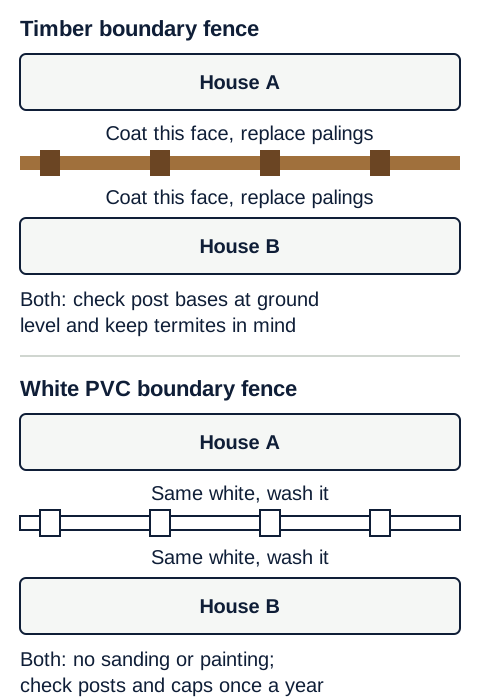
What a timber boundary asks for over the years
Timber is a good fencing material when it is built and kept up the way the industry recommends. WoodSolutions, the timber industry's own guide, recommends:
- Treated posts and palings. Posts specified to H4 treatment and palings and rails to H3, with preservative on any cut or joint.
- A finish straight away. A protective finish "immediately after installation is recommended". Clear finishes used on their own give little UV protection and "require reapplication at six month intervals". Opaque paint gives the best protection against weathering but hides the timber.
- Watching the posts. "The mortised or halved joint and the post base at the ground line are the two key areas for decay in timber fencing."
- Keeping it clear. Keep the fence clean and free of debris that traps moisture or attracts termites.
Termites are the other timber question in Queensland. The Queensland Building and Construction Commission advises having a licensed pest controller inspect your property every year, or more often in high-risk areas. That advice is written for the house, and a timber fence on the boundary is worth a look at the same time.
The timber you choose and the care it gets decide how long it lasts. WoodSolutions says fencing timber should ideally come from durability classes 1 or 2, where its natural durability gives "an expected service life in ground contact of at least 15 years and if outside above ground and properly maintained, many years beyond this".
On a shared boundary, every item on that list is two jobs: one for each face, or one job you have to agree to split.
| Upkeep job | Timber boundary fence | White PVC boundary fence |
|---|---|---|
| Coating each face | A protective finish once it is up, then recoats; clear finishes every six months | None: no sanding or painting |
| Palings and pickets | Replace split or loose palings as they go | No palings to replace; the panels and rails are PVC |
| Posts and storms | Check for decay at the post base and joints; walk the line after a big storm | Check the posts stand straight and the caps are on; walk the line after a big storm |
| Termites | Keep the fence clear of debris; look at it in the yearly check | No timber in the panels for termites to work on |
| Cleaning | Before each recoat | A soap-and-water wash when it needs one |
| Both faces match | Only if both households keep up their side | Same white on both faces |
What white PVC changes for both households
White PVC takes the coating job off the list for both of you. Every Probuild panel kit is virgin PVC in a smooth matte white with a 30-year limited manufacturer's warranty, and our PVC fences are UV resistant and do not need sanding or painting. The white is the same on your side and your neighbour's, so neither of you is waiting on the other to repaint.
PVC still needs a little care. A soap-and-water wash keeps it bright, and our guide to cleaning PVC fencing covers what to use. The posts, footings and gate hardware deserve a look once a year, which our guide to how long PVC fencing lasts explains. For wind, our guide to whether a PVC fence will stand up to a Brisbane storm covers posts and footings.
On a boundary where privacy is the main concern, a full-privacy panel such as the Moreton (1800 x 2388 mm) gives both yards a solid white screen. See the privacy PVC fencing options.
Talk it through with your neighbour before the quote
Raise upkeep at the same time as material and cost, before anyone books a quote. If you want to share the cost, the Act expects you to agree before non-urgent work starts, and upkeep is the part people forget to agree on. A short, plain conversation covers it:
- Start with the fence you have. "Our side of the fence is getting tired. How is it looking on yours?"
- Name the upkeep, not just the price. "Timber would need coating on both sides every so often. PVC just needs a wash. Which suits you?"
- Agree who does what. If you choose timber, agree who coats which face and when. If you choose PVC, agree on the panel style and fence height.
- Get one quote you both see. Share the quote for your fence type and length so you are both working from the same numbers.
If you cannot agree, the Queensland Government's step-by-step guide to fence disputes explains the formal notice and the role of QCAT.
Three questions to decide for your boundary
- Who will keep up each face for the next decade? If the honest answer is "probably nobody", choose the fence that needs the least upkeep.
- Does your neighbour care more about a natural look or about never repainting? Their side is half the fence and half the cost.
- What do you need from the fence: privacy, a lower picket line or airflow through semi-privacy panels? That decides the panel, whichever material you choose.
If PVC is the answer, call (07) 3186 9711 or send us your fence type and run length, and we will quote it so you and your neighbour see the same numbers.
Frequently asked questions
Is PVC or timber better for a Brisbane fence?
For most Brisbane owners who would rather not keep recoating a fence, white PVC is the better choice; timber is the better choice if you want a natural look and will keep finishing it. The timber industry's WoodSolutions guide ties timber's service life to choosing durable timber and keeping it maintained. White PVC needs no sanding or painting, and every Probuild kit carries a 30-year limited manufacturer's warranty.
Is PVC cheaper than timber?
Upfront, it depends on the quote for your run. We list supply prices for most of our panel kits in the shop (posts sold separately), and installed prices are quoted for your property. Over the years, a timber fence adds the cost of recoating both faces and replacing palings, while white PVC needs no sanding or painting.
Which is better on a shared boundary, PVC or timber (wood)?
It depends on the upkeep both households will do. Timber needs a protective finish once it is up and regular recoats, and its posts are where decay usually starts. White PVC needs no sanding or painting and is the same white on both faces, so it suits neighbours who would rather not keep coating a fence.
Who pays to maintain a dividing fence in Queensland?
Usually both neighbours share it equally. The Neighbourhood Disputes (Dividing Fences and Trees) Act 2011 says adjoining owners contribute equally to building and maintaining a sufficient dividing fence, and fencing work includes repair and maintenance. Neighbours can agree on a different split. This is general information; the Queensland Government's dividing fence pages cover your own situation.
Do I have to give my neighbour the good side of the fence?
It is something you and your neighbour settle between you, so agree which way the fence faces before it goes up. With white PVC both faces are the same white, so neither neighbour is left looking at a weathered side. On a front boundary, the Paddington dual-layer picket has pickets on both sides of the rail, so it looks finished from both yards. With a timber paling fence, the rails usually show on one side.
How often does a timber fence need a new finish?
It depends on the finish. The timber industry's WoodSolutions guide recommends a protective finish straight after installation, says clear finishes used on their own need reapplying at six-month intervals, and names opaque paint as the best protection against weathering. For a paint or stain, follow the product's own recoat instructions.
Can I repair the dividing fence without asking my neighbour?
For urgent repairs after the fence is damaged, yes, if it is impracticable to give your neighbour notice first (section 28). You can then ask them to contribute with a notice for urgent fencing work (section 32). For other work you want your neighbour to help pay for, the Act expects a notice to contribute and an agreement first, or a QCAT order. If you, or someone you let onto your land, damage the fence carelessly or on purpose, you must restore it to a reasonable standard.
How do I keep a PVC boundary fence looking good?
Wash it with soap and water when it needs it and walk the line once a year to check the posts, caps and any gate hardware. Our guide to cleaning PVC fencing covers the method.